
Transparency Note: I am not affiliated by any brand mentioned in this post. I purchased these products myself, and I do not receive any commission or compensation if you choose to buy them. This is an independent review.
Many people wonder how much electricity their light bulb uses and whether switching to LEDs is actually worth it. The good news: you don’t need any special tools or a degree in electrical engineering to find out.
In a few minutes, you can check how much power your bulb uses, get a rough idea of its efficiency, and decide if it’s time to upgrade to an energy-saving LED.
Why It’s Worth Knowing How Much Power Your Bulbs Use
Most of us only notice our lighting when a bulb burns out or the room suddenly feels dim. But knowing how much power your bulbs use has a few nice side effects:
- You can spot energy hogs quickly (hint: if it’s hot, it’s probably wasting electricity, as the power is not only converted to light, but also to heat).
- You can prioritise replacements — swap the worst offenders first instead of replacing everything at once.
- You get a better feel for what’s actually on your energy bill, rather than just guessing.
If your bulbs are old incandescents or halogens, there’s a good chance you’re paying more than you need to for the same amount of light.
How to Check How Much Electricity Your Light Bulb Uses
Option 1: Find the wattage on the label
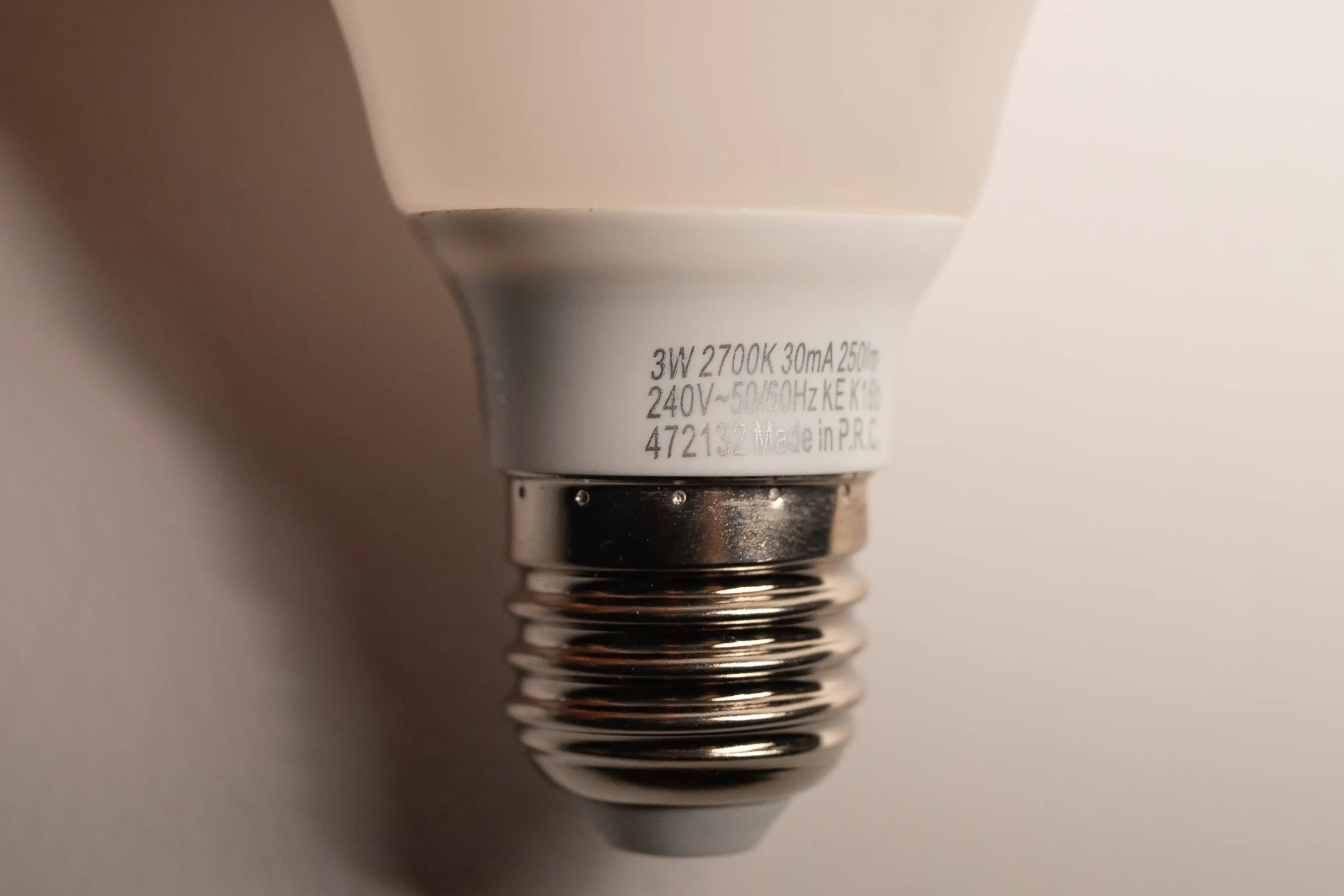
You can get a perfectly good first estimate just by reading the label on the bulb. Before you take a look at the bulb however, you may have to take it out of the setting. Check out my simple guide on how to change a light bulb.
Now closely look at the metal base or printed text on the glass. You’re looking for a number followed by a capital “W”, like:
2 W, 24 W, 40 W, 60 W
That number is the bulb’s wattage — the amount of power it uses when it’s turned on.
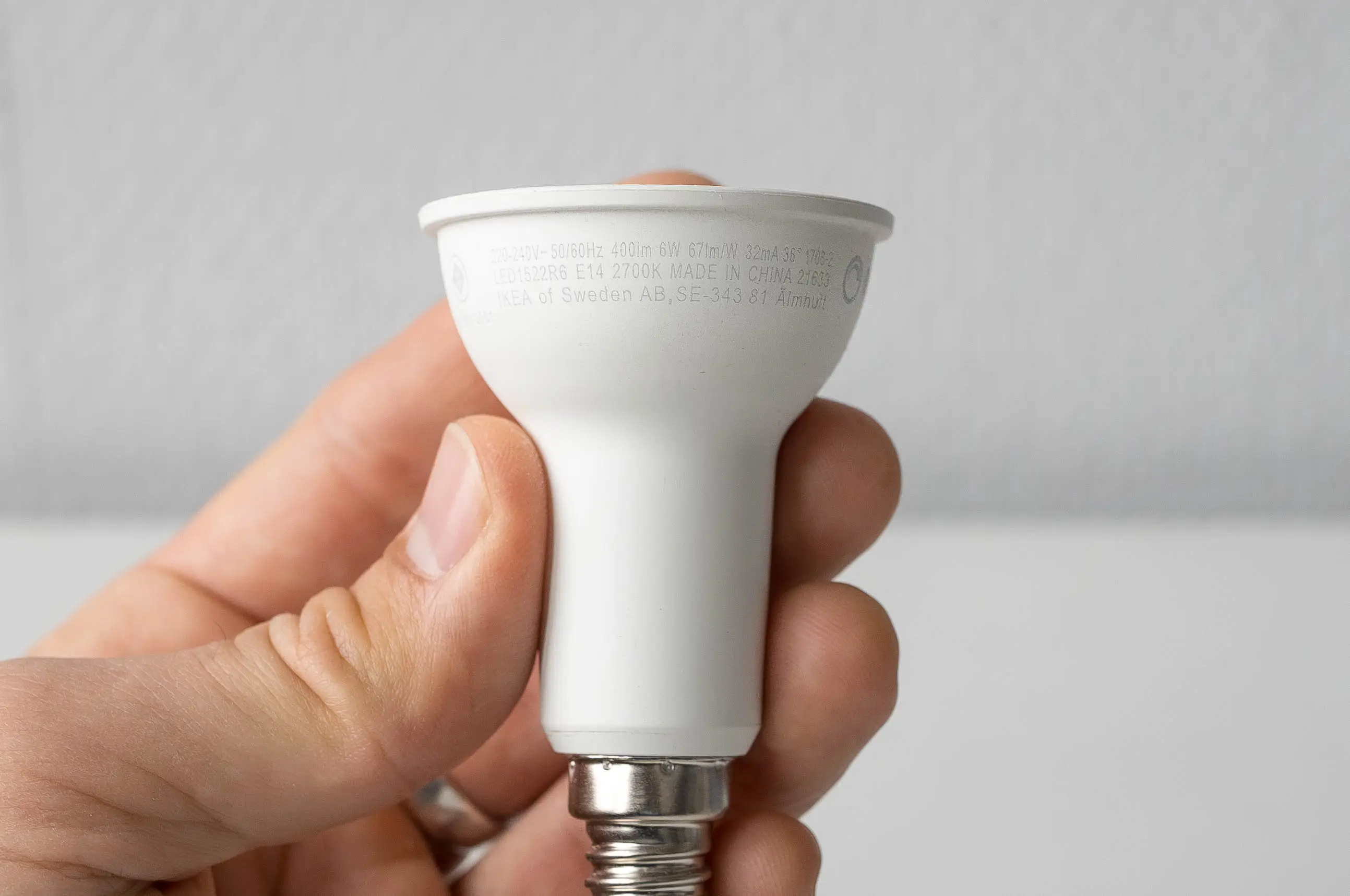
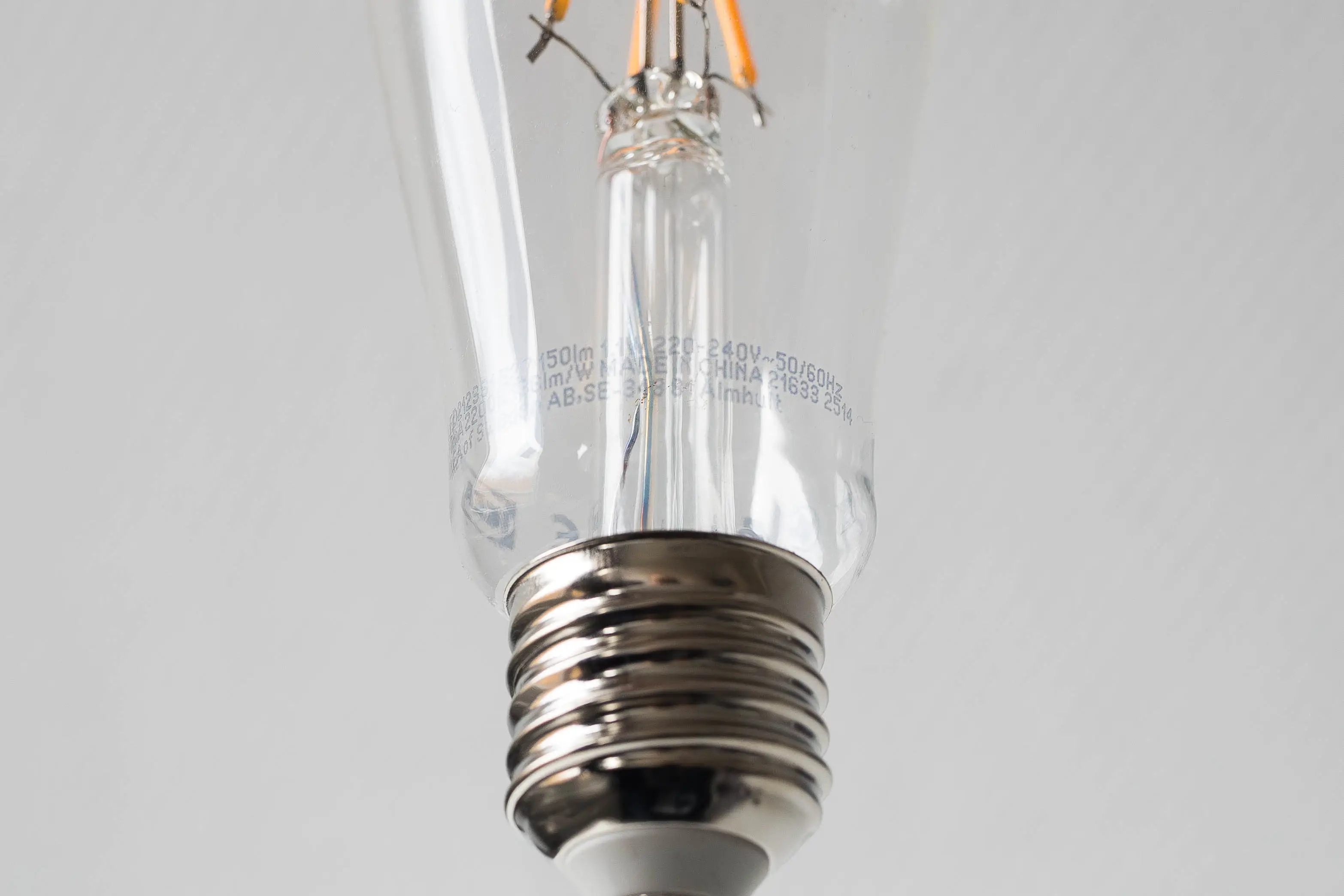
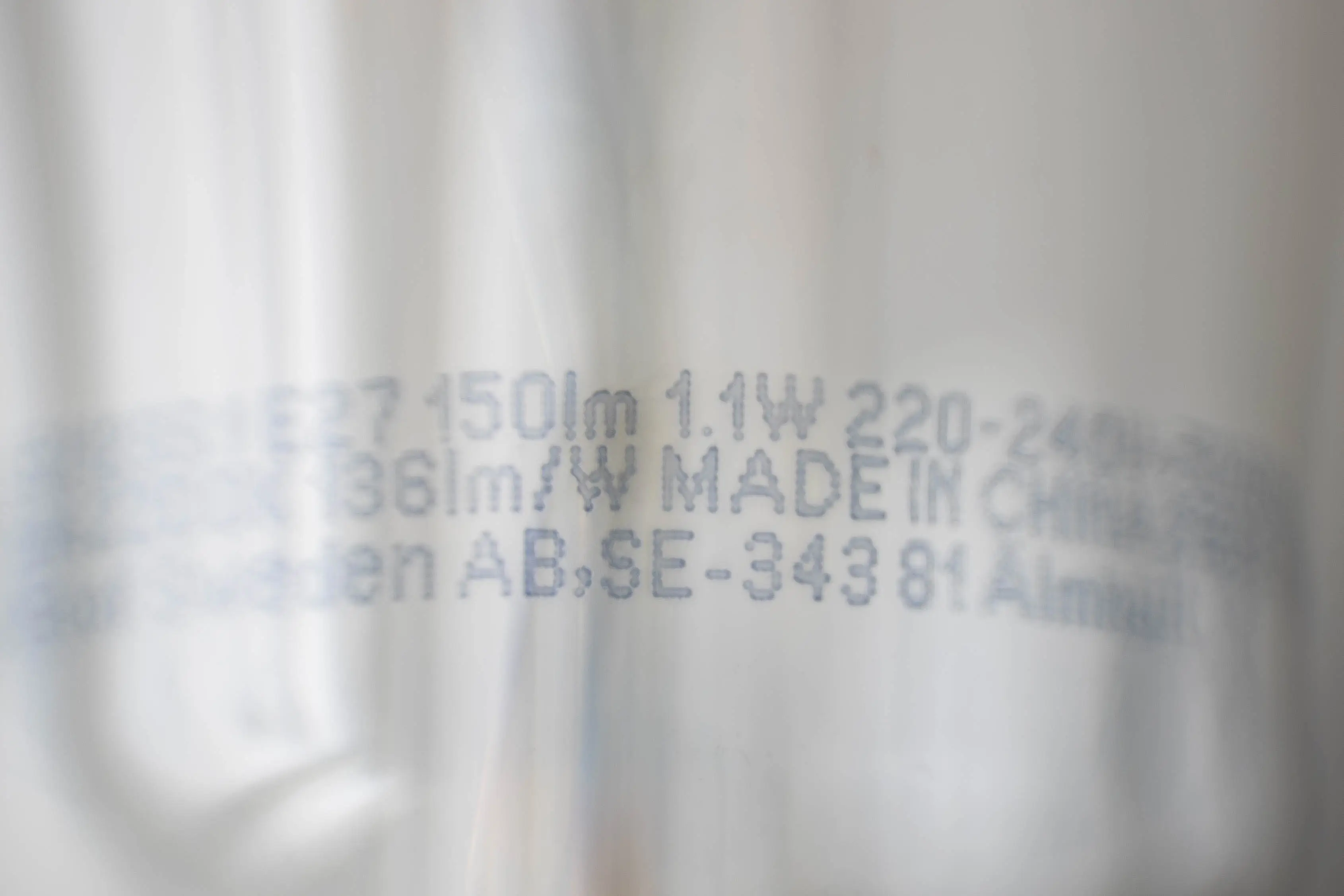
A few rules of thumb:
- 60 W → typical old incandescent
- 35 W → halogen spot
- 2–10 W → modern LED
If it says anything above 30 W, it’s almost certainly not energy-efficient and is a good candidate for replacement.
Option 2: Plug in the standing lamp into a power meter
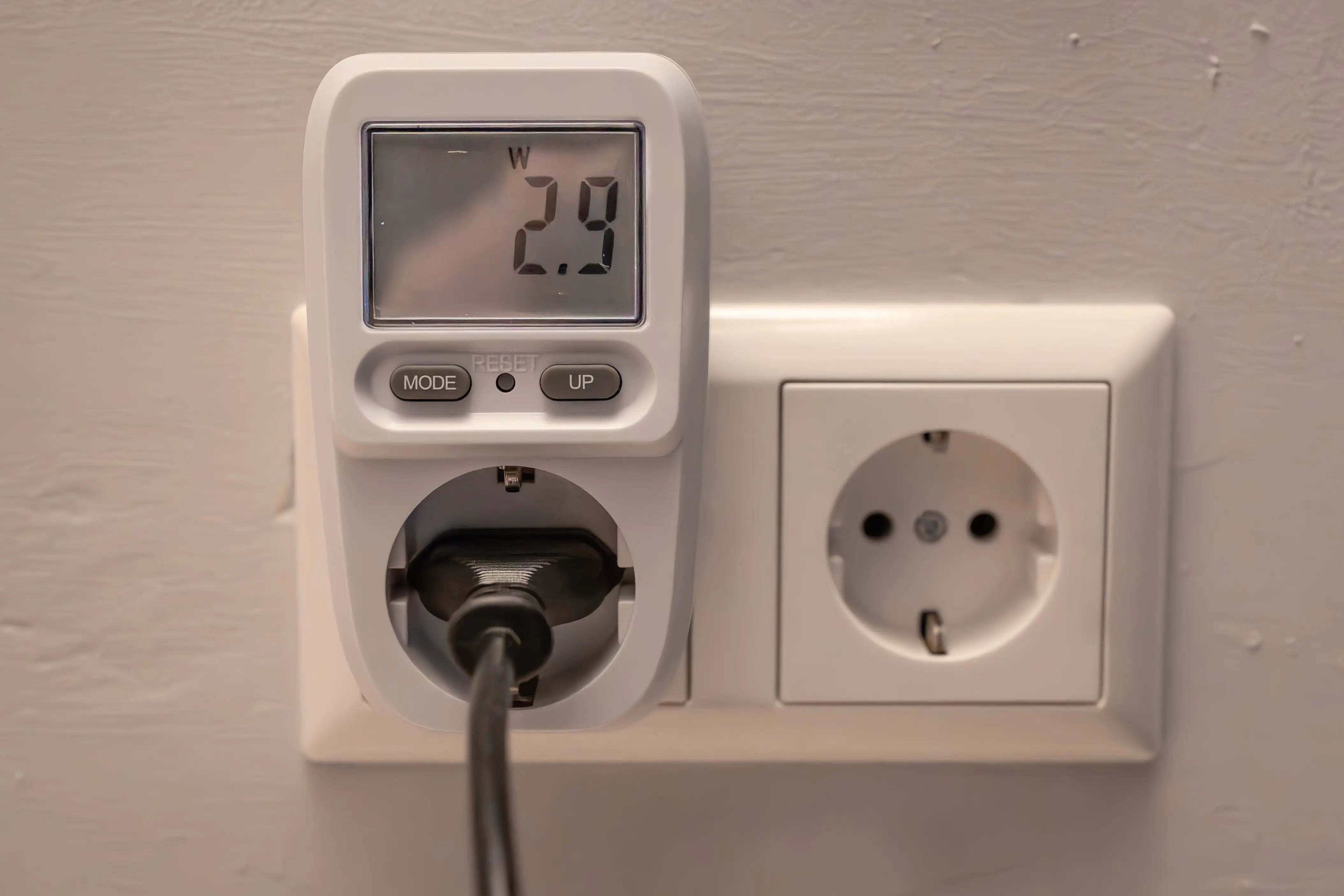
If your light bulb is in a standing lamp that plugs into the wall, you can simply place a power meter between the lamp and the socket to measure its energy use.
This is especially helpful when the bulb has no label or the markings are faded. Just unscrew the bulb, put it into a standing lamp, and measure it directly with a power meter. These small devices are inexpensive and great for checking how much energy different appliances use. We got ourselves the CSL Energy Cost Meter, and it works reliably.
What Do I Do with the Wattage?
Now, you might wonder: “Alright, great, the bulb consumes 15 W — but what do I do with that number?”
I generally use these numbers to figure out which devices at home use the most power. In winter especially, lights are often on for several hours. So if you know you need a lamp running all evening, and one bulb uses 30 watts while another uses 4 watts, it makes sense to let the 4-watt bulb handle the background lighting — and only switch on the 30-watt lamp when you actually need the extra brightness.
It also gives you a quick way to estimate how much your lighting is costing you.
Let me explain in simple terms how to estimate your actual energy cost (or jump directly to the equation).
Watts (W) tell you how much power the bulb is using right now.
Think of it as the “speed” at which the bulb consumes electricity.
But electricity is billed over time. That’s where Watt-hours (Wh) and kilowatt-hours (kWh) come in. They tell you how much energy the bulb uses when it has been running for a certain amount of time.
A simple way to think about it:
- Watts = power right now
- Watt-hours = energy used over time
- kWh = the unit your electricity bill uses
So if a bulb uses 100 W, it uses 100 Watt-hours in one hour.
100 Watt-hours = 0.1 kWh (because 100 W ÷ 1000 = 0.1).
Once you know that, you can estimate your cost:
- Look up your electricity price — in most of Europe it’s around 0.30 € per kWh.
- Multiply your bulb’s consumption (in kWh) by your cost per kWh.
For example:
0.1 kWh × 0.30 € = 0.03 €
So it costs 3 cents to run a 100 W bulb for an hour.
Here is a general formula that you can use to calculate your bulb’s hourly cost:
Cost per hour (€) = (Bulb Watts ÷ 1000) × Price per kWh (€)
Final Thoughts
Checking how much energy your light bulb uses is surprisingly easy and doesn’t require any special equipment. But it gives you a much clearer picture of how much electricity (and money) goes into your lighting.
I hope you found this guide helpful — and I’m glad you’re here on Fix & Function!
❓FAQ: Checking Your Light Bulbs
Q1. Where can I find the wattage on a bulb?
Usually near the metal base or on the glass. It’s printed as a number plus “W” (for example, 15 W, 40 W, 60 W, 8 W).
Q2. What if the bulb doesn’t show watts?
If the bulb has no label or the markings are faded, search the brand and model number online, or use a power meter to measure the real power draw. If both are impossible, assume that a very hot bulb is likely an incandescent or halogen and not very efficient.
Q3. Is a higher wattage always better?
No. Higher wattage just means higher energy use, not better light. For brightness, look at lumens (usually followed by a “lm” on the light bulb. A 7 W LED can easily replace a 60 W incandescent in terms of light output.
Q4. My bulb feels very hot — does that mean it’s inefficient?
Almost always. You can imagine the following: Power goes from the electricity grid into your light bulb. It is there converted into warmth and light. The more energy is converted into warmth, the less into light. Incandescent and halogen bulbs waste most of their energy as heat, not light. LEDs stay much cooler for the same brightness.
Q5. Do LEDs work in any fixture?
Most of the time, yes — as long as the socket type and voltage match, and the fixture doesn’t require a special bulb (like certain dimmers or enclosed fixtures). Always check the small print on the LED packaging.